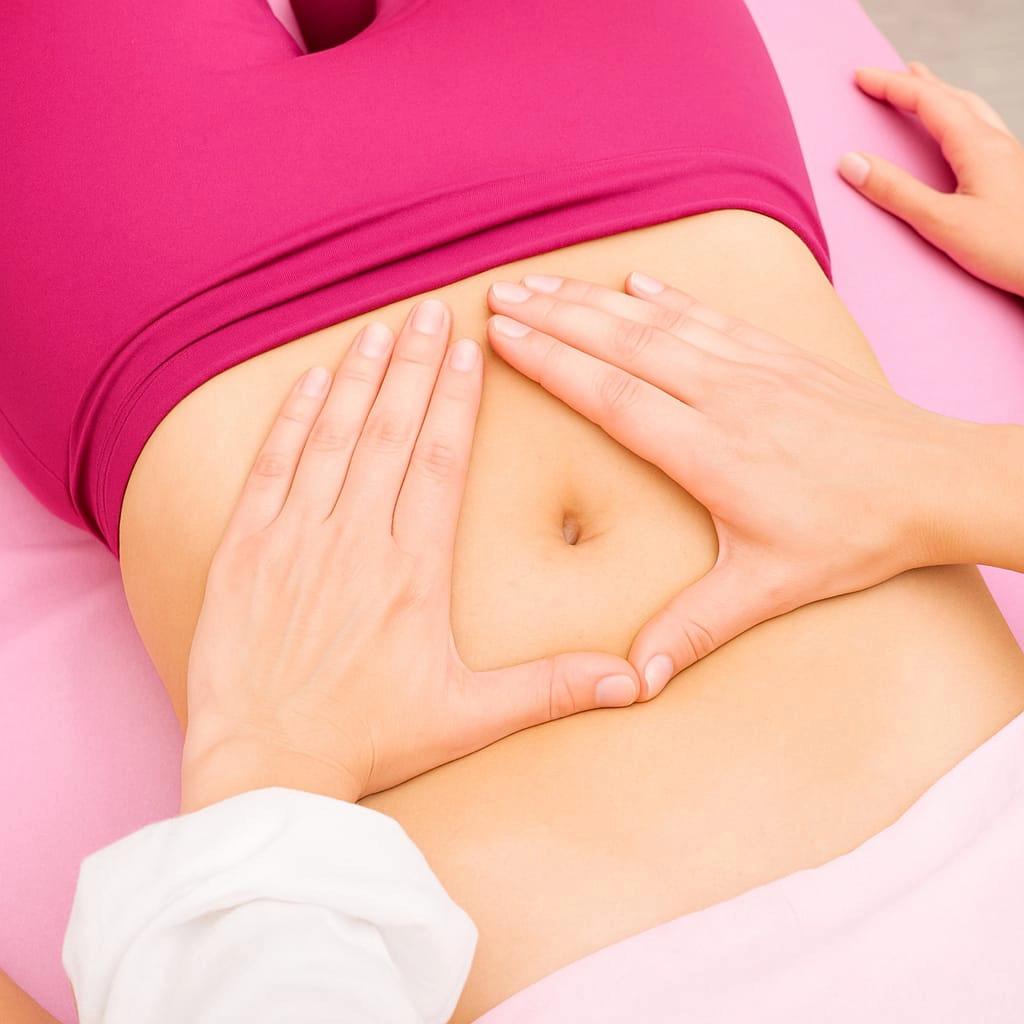
More than a medical subject, pelvic health reflects how society views the female body.
Even today, in the 21st century, many women still whisper when talking about their bladder, their perineum, or their menstruation. That whisper is often a symptom of a silent taboo that has accompanied us since childhood. Whether due to shame, embarrassment, or simply lack of knowledge, the female body continues to be a territory that is little explored — and this has real consequences for well-being and quality of life.
Pelvic health and menstruation are deeply connected.
During the menstrual cycle, the pelvic floor responds to hormonal fluctuations — estrogen, for example, influences the tone and elasticity of tissues, while progesterone can increase the sensation of heaviness or swelling in the pelvic region.
Understanding these variations is essential to better understand one’s own body and adapt care during each phase of the cycle.
In the days leading up to menstruation, it is common for some women to feel the pelvic floor more sensitive or tense. During these moments, relaxation practices, diaphragmatic breathing, and gentle stretching can be great allies.
During the ovulation phase, when estrogen levels are higher, tissues tend to be more elastic — a good time for body awareness exercises and strengthening.
Menstruation, therefore, is not just a monthly event, but a window of communication with the body. When intense and disabling pain occurs during this phase, it is a sign that something needs attention and requires medical evaluation.